-
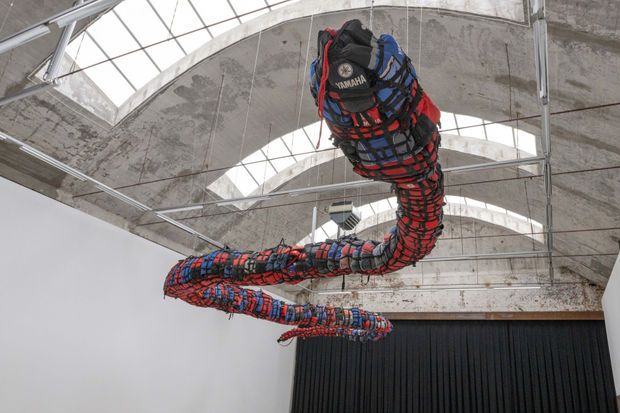
Project space: Ai Wei Wei - Life vest snake (2016)
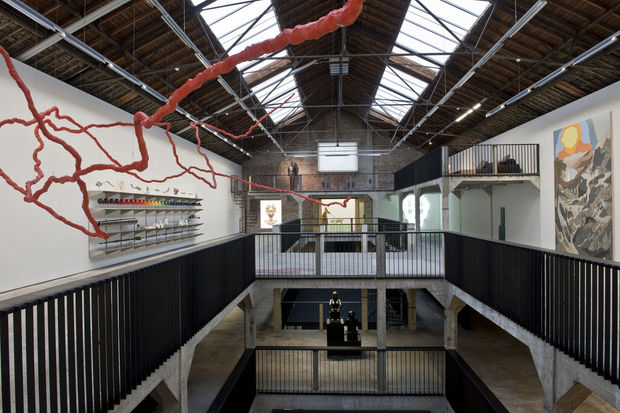
January 2024 - June 2025In Life Vest Snake, Ai Weiwei braids traditional Eastern iconography with urgent contemporary realities. Suspended from the ceiling, a sinuous serpent takes shape from 140 life vests once worn by refugees who, in 2016, crossed from Africa and the Middle East to the Greek island of Lesbos. The work coils through the space as if advancing toward the viewer—at once a protective skin and a stark memento of peril, hope, and survival.
Ai’s transformation of functional objects into sculpture brings the ethics of looking into the gallery: every vest has a story; every story is a life. The serpent, a potent symbol across cultures—rebirth, danger, knowledge—becomes a vessel for collective memory and a reminder that humanitarian crises are not abstractions but accumulations of individual journeys.
Within the Vanhaerents Art Collection’s Project Space, Life Vest Snake extends our commitment to presentations that reconnect objects to their social context. The installation also resonates with Ai’s broader practice, which has addressed dispossession, censorship, and freedom of expression through sculpture, film, photography, and architectural interventions. Here, sculpture functions as witness: a form that does not resolve the crisis it depicts, but insists that we remain present to it.
-
Viewing Depot EXH#02
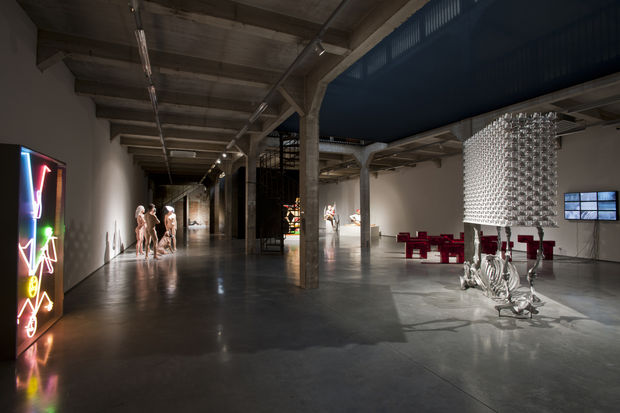
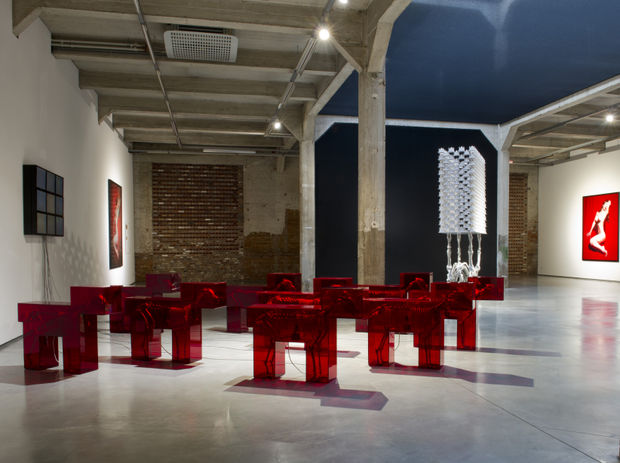
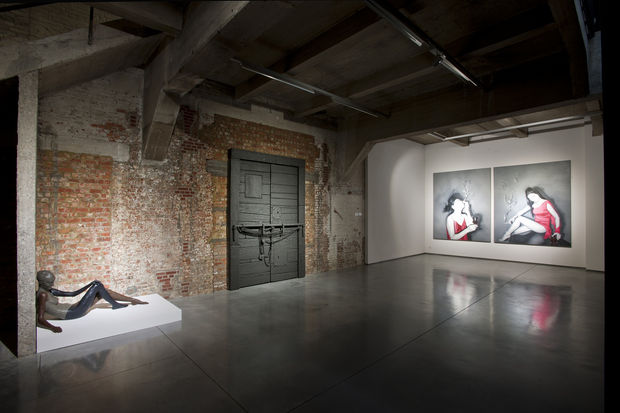
January 6 2021 - 31 December 2023Curated collectively by the Vanhaerents Art Collection team, the second Viewing Depot continues the spirit of the first while responding more directly to its time. Shaped by the COVID-19 era and broader social and political upheavals, the presentation foregrounds dialogues around identity, consumerism, and power—both thematically and through material confrontations.
A complementary section, Spotlight, highlights work by Black artists in the wake of Black Lives Matter. Rather than isolating these voices, Spotlight threads through the building—from cabinet rooms to entrance hall and upper floors—so that conversations unfold across contexts and audiences.
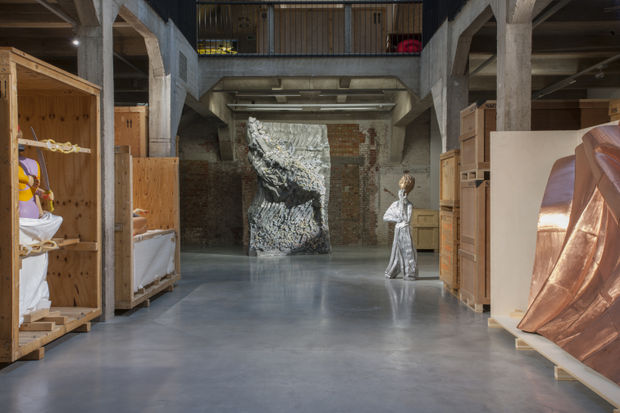
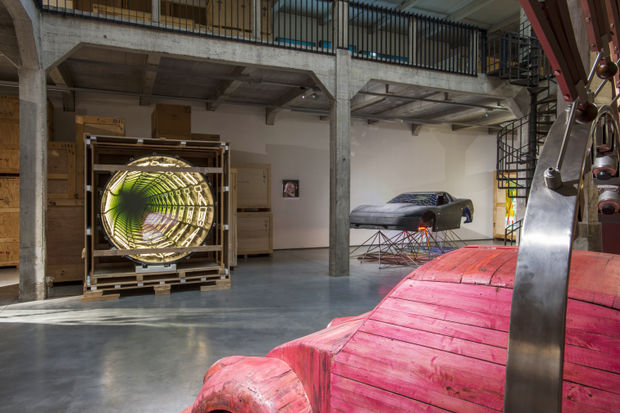
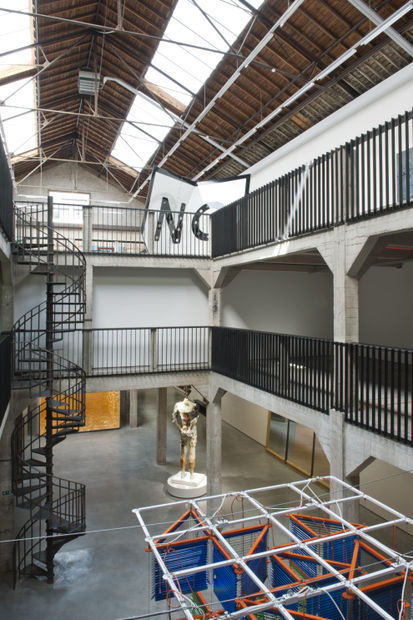
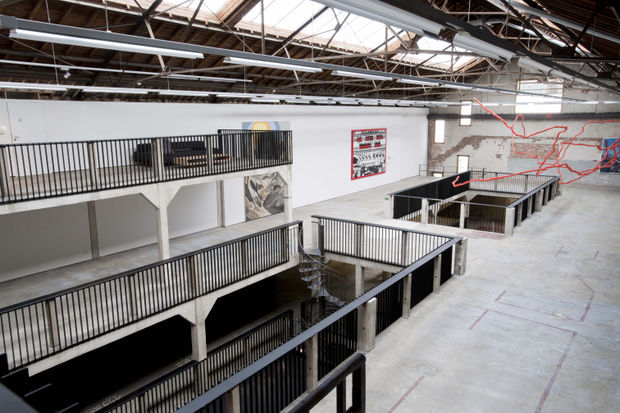
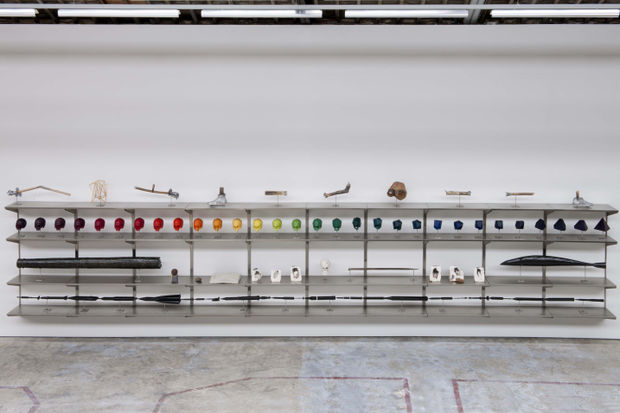
The installation leverages the Viewing Depot’s architecture and logistics: large-scale series (e.g., Zhang Huan, Sarah Morris) engage the building’s monumentality, while on-site storage and custom crates enable agile rotation without disrupting the exhibition’s narrative. This hybrid model—simultaneously display and day-to-day stewardship—keeps the collection porous to new juxtapositions and responsive to loan requests.
Iconic works by Bruce Nauman, Jason Rhoades, Lorna Simpson, Rudolf Stingel, and Wade Guyton meet a rising generation—among them Korakrit Arunanondchai, Anne Imhof, and Marguerite Humeau—whose practices address global urgencies and expand representation beyond Western and male canons.
Selected artists include: Derrick Adams, Ai Weiwei, David Altmejd, Korakrit Arunanondchai, Derek Fordjour, Peter Friedl, Wade Guyton, Mark Handforth, Marguerite Humeau, Anne Imhof, Matthew Day Jackson, Titus Kaphar, Bharti Kher, Joy Labinjo, Gerald Lovell, Kris Martin, Paul McCarthy, Allan McCollum, Mariko Mori, Sarah Morris, Mr., Takashi Murakami, Bruce Nauman, Iván Navarro, Karl Philips, Jason Rhoades, Ugo Rondinone, Michael Sailstorfer, Tomás Saraceno, Lorna Simpson, Vaughn Spann, Rudolf Stingel, Emmanuel Taku, Kehinde Wiley, Danh Vō, Franz West, Zhang Huan.
-
Viewing Depot EXH#01
NOVEMBER 20, 2018 – DECEMBER 31, 2020For its first decade, the Collection’s exhibitions drew on pop culture—naturally, given Pop Art’s deep imprint on our holdings. In 2018 we introduced a new format: the Viewing Depot. Inspired by the German Schaulager, it merges display and storage so works remain optimally accessible for study, conservation, and loans. With most pieces now on site in Brussels, rotations are agile and logistics transparent.
EXH#01 explored what this hybrid can do. Rather than a sealed, white-cube presentation, the depot reflects the real workings of a private collection: an instinctive, organic hang, crates in dialogue with artworks, and glimpses behind the scenes. On arrival, David Altmejd’s Colossi appear in a striking new context—inside and outside their cases—while tucked-away corners create intimacy for works like Christian Boltanski’s Réserve des Suisses morts (1989). The selection moves beyond earlier pop-centric shows, favoring depth within artists’ oeuvres and new juxtapositions.
A metal armature with pedestals and red velvet curtains stages Francesco Vezzoli’s La Nuova Dolce Vita in the cabinet space between the two main buildings. The top floor emphasizes multidisciplinarity, confronting pieces by Anne Imhof, Sam Falls, and Lucien Smith to probe where a work “exists” within an artist’s practice. The result is less a conventional exhibition than an exercise in looking—where architecture yields to art, logistics become legible, and context reshapes meaning.
Selected artists: Hamra Abbas, David Altmejd, Jean-Marie Appriou, Korakrit Arunanondchai, Christian Boltanski, James Casebere, Jeff Elrod, Sam Falls, Sylvie Fleury, Mark Handforth, Federico Herrero, David Hockney, James Hopkins, Marguerite Humeau, Matthew Day Jackson, Paul McCarthy, Allan McCollum, Mr., Matt Mullican, Bruce Nauman, Albert Oehlen, Ugo Rondinone, Sudarshan Shetty, Lucien Smith, Nick Van Woert, Francesco Vezzoli, Danh Vō, Franz West.
-
Project space: Tomás Saraceno, Many Suns and Worlds
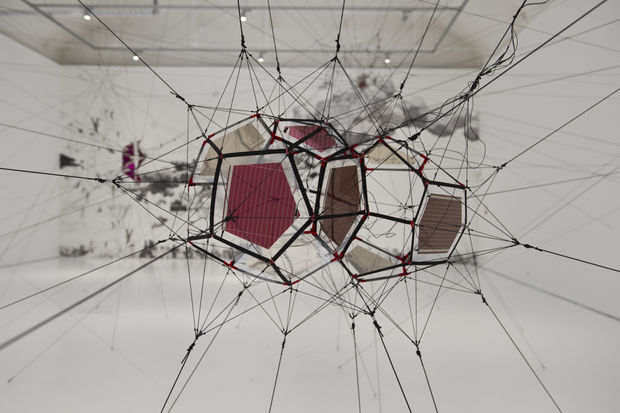
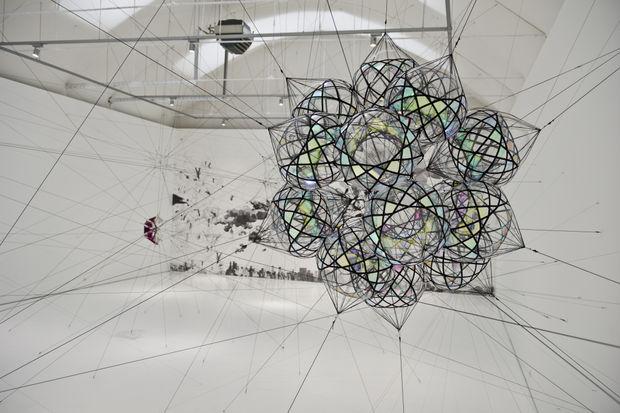
APRIL 21, 2016 – OCTOBER 28, 2017Many Suns and Worlds was the first solo exhibition in Belgium by Tomás Saraceno (b. 1973, San Miguel de Tucumán, Argentina). Occupying the Project Space in 2016–2017, the show formed part of Saraceno’s visionary Cloud Cities project — an exploration of how humans coexist with their environment through a poetic blend of art, architecture, and science.
The space was transformed into a luminous white zone filled with inflated geometric forms connected by networks of cords resembling a vast spider’s web. Visitors were invited to navigate this suspended landscape, engaging directly with ideas of space, gravity, and connection.
Drawing inspiration from Buckminster Fuller’s concept of lightness and sustainability, Saraceno’s work proposes a utopian vision of boundless architecture — a communal realm between earth and sky where imagination, ecology, and cosmic energy intertwine.
-
Project Space: Philippe Parreno, Marilyn
MAY 3, 2014 – JANUARY 30, 2016In Marilyn (2012), Philippe Parreno (b. 1964, Oran, Algeria) reimagines the final months of Marilyn Monroe’s life through a haunting blend of film, robotics, and artificial intelligence. Drawing inspiration from Monroe’s stay at New York’s Waldorf Astoria in 1955—where the actress sought refuge from fame and loneliness—Parreno reconstructs her hotel room and presence through technology.
A computer recreates her voice, a robot imitates her handwriting, and the camera becomes her gaze. The result is a ghostly portrait that blurs the boundaries between fact and fiction, presence and absence, memory and imagination.
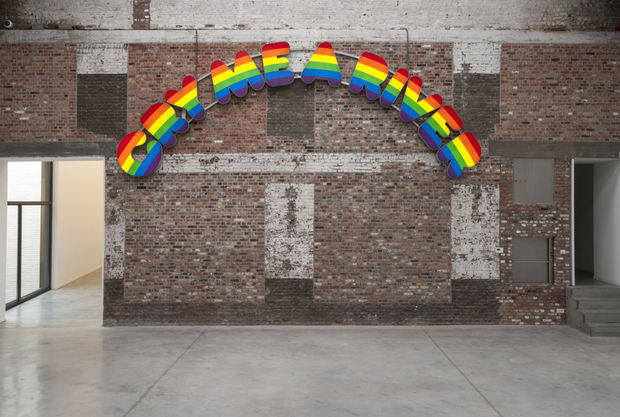
In the Project Space of the Vanhaerents Art Collection, the installation was introduced by Parreno’s subtle marquee above the entrance—a quiet reminder that what follows is both illusion and elegy.
-
Man in the Mirror
MAY 21, 2014 – OCTOBER 28, 2017Man in the Mirror was the third major exhibition at the Vanhaerents Art Collection in Brussels, co-curated by Walter Vanhaerents and Emma Dexter, known for her work with ICA London and Tate Modern. Taking its title from Michael Jackson’s 1988 hit, the exhibition explored questions of identity, reflection, and the tension between self-perception and society.
Through works by artists including David Altmejd, Rashid Johnson, Jeppe Hein, Michelangelo Pistoletto, Haroon Mirza, Iván Navarro, and Joseph Kosuth, the show examined mirrors both literally and metaphorically—as tools for introspection and distortion alike. Installed in an open, wall-free setting, it created visual and conceptual dialogues between generations of artists.
Eclectic yet deeply introspective, Man in the Mirror invited visitors to confront the fractured image of the contemporary self—caught between reality, illusion, and the world’s shifting values.
Featured artists: Franz Ackermann, Darren Almond, David Altmejd, Matthew Barney, James Lee Byars, Jan De Cock, Elmgreen & Dragset, Ugo Rondinone, Bill Viola, Danh Vō, and many others.
-
Project Space: AES+F, The Feast of Trimalchio
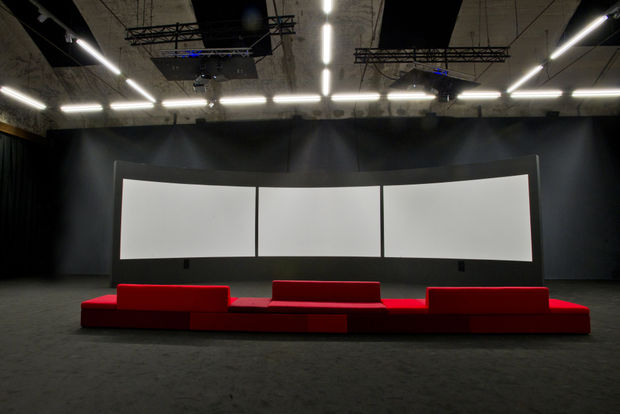
APRIL 20, 2012 – NOVEMBER 30, 2013The Feast of Trimalchio (2009) by the Russian collective AES+F is a monumental video installation composed entirely of digitally staged photographs. First presented at the 53rd Venice Biennale, the work reimagines Cena Trimalchionis from Petronius’ Satyricon—a satire of excess and vanity—through a contemporary lens of luxury, consumerism, and desire.
Set in an opulent, imaginary resort where guests and staff perform rituals of indulgence, the film unfolds as a visual symphony of pleasure, power, and inversion. Accompanied by a dramatic score, it culminates in a reversal of roles between master and servant, exposing the fragility of privilege and the cyclical nature of decadence.
Through its cinematic beauty and moral ambiguity, The Feast of Trimalchio reflects AES+F’s fascination with the myths, vices, and contradictions of globalized culture—a modern-day Olympus where spectacle reigns supreme.
-
Project Space: David Altmejd, Colossi
APRIL 23, 2010 – MARCH 10, 2012In Colossi (2007), Canadian artist David Altmejd (b. 1974, Montreal) created a series of monumental mirror sculptures that bridge mythology and the modern psyche. First unveiled at the Denver Museum of Contemporary Art and later presented in a solo exhibition at the Vanhaerents Art Collection, the works reimagine the ancient theme of the colossus—from the Colossus of Rhodes to modern icons like Christ the Redeemer—through a deeply human lens.
Altmejd’s towering mirrored figures appear both architectural and organic, blending beauty, decay, and transformation. Within their reflective surfaces, staircases and passageways form miniature worlds—metaphors for consciousness and evolution. The mirror, a recurring motif in Altmejd’s practice, becomes both material and metaphor, a portal between self and surroundings.
Installed on a chessboard floor referencing Marcel Duchamp, Colossi staged an endless game of reflection, mutation, and regeneration—a meditation on the fragile boundary between the monumental and the mortal.
-
Sympathy for the Devil
APRIL 30, 2011 – NOVEMBER 30, 2013Sympathy for the Devil was the second major exhibition at the Vanhaerents Art Collection in Brussels, co-curated by Walter Vanhaerents and Pierre-Olivier Rollin (Director of BPS22). Taking its title from the 1968 Rolling Stones anthem, inspired by Baudelaire and *Bulgakov’s The Master and Margarita, the show explored the moral and emotional turbulence of the human condition.
Unlike its predecessor Disorder in the House, which sought structure within chaos, this exhibition delved into the chaos itself—examining themes of temptation, fragility, and the duality of good and evil.
Highlights included James Lee Byars’ dazzling gold installation The Death of James Lee Byars (1994), alongside works by Bruce Nauman, Ugo Rondinone, and others meditating on life, death, and transcendence. Provocative juxtapositions—such as Farhad Moshiri’s Run Like Hell and Mario Merz’s Stuffed Caiman with Fibonacci—created a charged dialogue between beauty and danger, morality and desire.
Ultimately, Sympathy for the Devil invited visitors to question the boundaries between saint and sinner, challenging the very notions of virtue, seduction, and the human soul’s restless search for meaning.
Featured artists: James Lee Byars, Wim Delvoye, Urs Fischer, Barbara Kruger, Steve McQueen, Mario Merz, Yasumasa Morimura, Farhad Moshiri, Ugo Rondinone, Yinka Shonibare, Johan Tahon, and many others.
-
Project Space: Mark Handforth
MARCH 16, 2007 – JUNE 27, 2010Presented alongside the Vanhaerents Art Collection’s inaugural exhibition Disorder in the House, Mark Handforth (b. 1969, Hong Kong) transformed the Project Space with a luminous solo presentation centered on his neon wall sculpture Stardust (2005), a tribute to David Bowie’s legendary alter ego, Ziggy Stardust.
Fascinated by artificial light, Handforth uses neon not to create harmony but to explore dissonance, distortion, and the poetry of imperfection. His sculptures—ranging from bent street signs to sagging lampposts—reinterpret familiar public objects as symbols of fragility and endurance.
Drawing from Minimalism, Pop Art, and the subversive spirit of Martin Kippenberger, Handforth’s work examines how urban forms age, decay, and reflect the cultural tensions of contemporary life. In Stardust, light becomes both material and metaphor: a fractured echo of the cosmic and the everyday.
-
Disorder in the House
MARCH 16, 2007 – JUNE 27, 2010Disorder in the House was the inaugural exhibition of the Vanhaerents Art Collection in its new Brussels location. Curated by Walter Vanhaerents, the show brought together nearly seventy works spanning three decades of collecting, transforming chaos into a vibrant exploration of order, meaning, and contemporary culture.
Borrowing its title from Warren Zevon’s song, the exhibition staged a surreal film set where Takashi Murakami’s manga figures, Ugo Rondinone’s melancholic clowns, Paul McCarthy’s pirates, and Bruce Nauman’s animals coexisted in a dreamlike dialogue between Pop Art and its descendants.
Visitors were invited to interact physically and emotionally with the works—embracing Mariko Mori’s alien figures in Oneness (2003), confronting disorder as a path to reflection and renewal.
As the Collection’s debut, Disorder in the House not only introduced its breadth and complexity but also established a guiding principle for the decade to come: the dynamic interplay between high art and popular culture.
Featured artists: Doug Aitken, David Altmejd, Matthew Barney, Urs Fischer, Mark Handforth, Paul McCarthy, Takashi Murakami, Yoshitomo Nara, Bruce Nauman, Ugo Rondinone, Mariko Mori, and many others.